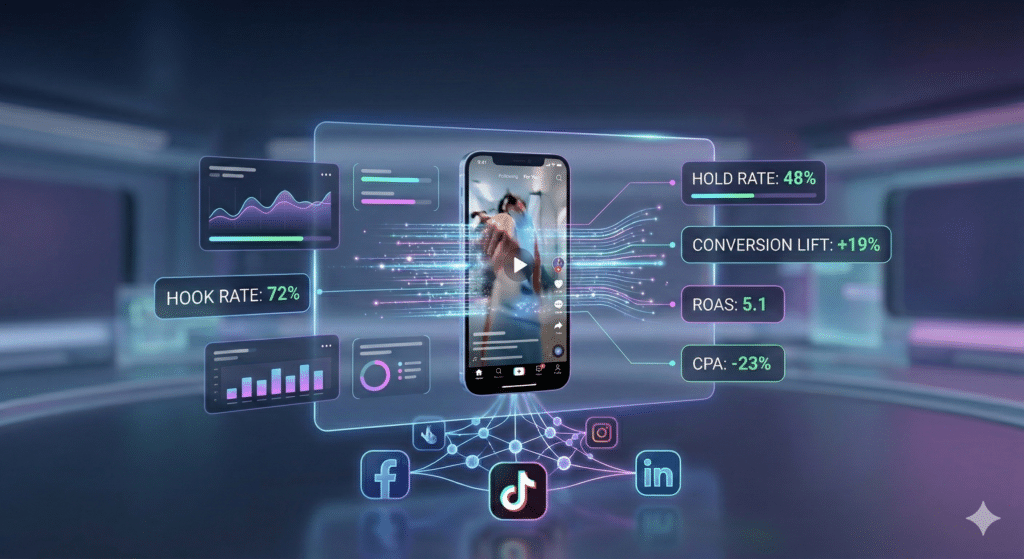
For years, the success of a Google Ads campaign depended on the expert’s ability to choose the right keywords and adjust bids manually. In 2026, those days are over. AI (via Performance Max and Smart Bidding) has taken control of execution.
The new battleground for Acquisition Managers? Signal quality. To win, you no longer just have to ‘advertise’, you have to ‘feed the algorithm’.
1. The end of post-cookie ‘blind steering’
With the end of third-party cookies and the strengthening of the GDPR, standard tracking signals have become blurred. If you settle for the basic conversion tag, Google will optimise your campaigns based on incomplete data.
The solution: Server-Side Tracking and Enhanced Conversions. By sending your conversion data directly from your server to Google, you give the AI a 360° view again. This is the difference between a stagnant ROAS and a campaign that scales.
2. Performance Max: From a ‘black box’ tool to a growth lever
Performance Max (PMax) has become the standard. But for a Digital Director, the risk is losing control over distribution. To regain control without restricting AI, the strategy is based on two pillars:
First-party audience signals: Feed your customer lists (CRM) into Google and tell it to find you twins of your best buyers.
Brand exclusion: Protect your profitability by isolating your brand queries from automated campaigns.
3. The shift towards profit-driven marketing
In 2026, ROAS (Return on Ad Spend) is no longer enough. A good Marketing Director now focuses on POAS (Profit On Ad Spend). Thanks to advanced data flows, you can now send Google Ads not your turnover, but your actual margin per product. The algorithm then learns to prioritise the sale of high-margin products rather than selling low-value stock.
4. Asset-Based Strategy: SEA becomes creative
The ad text became an adjustment variable. What matters today are the assets: high-definition videos, lifestyle images, and impactful titles generated or assisted by AI.
The challenge: your agency must no longer spend 80% of its time on auctions, but on the creation and testing of new visual assets to feed the machine.
Conclusion: The SEA has become a battle of data science
The 2026 advertising lever is a Formula 1 driven by an AI: you provide the fuel (your data CRM) and the circuit (your margin objectives), and you let the machine optimize the trajectory.
Is your account structure adapted to AI requirements? At ESV, we audit your data flows to transform your SEA into a predictive profit center.